It is a lonely feeling when a team you lead starts to feel like an adversarial front. For many line managers, transitioning into leadership reveals an unsettling truth: technical competence is distinct from the psychological agility required to manage human variance.
A dedicated, highly competent Line Manager finds themselves increasingly detached from their reporting team. Despite clear objectives, communication feels strained, meetings leave a residue of unspoken tension, and an isolating doubt creeps in. Specifically, the manager notices one reporting manager whose actions feel abrasive. To the line manager, this reporter’s persistent questioning, alternative proposals, and constant push for experimentation feel like a deliberate attempt to undermine authority. The manager begins to doubt their own capabilities, wondering if they lack the inherent gravitas to lead.
However, when diagnosed through objective frameworks, the truth is often far more innocent—and far more opportunistic. As certified practitioners of the Team Management Profile (TMP), developed by Margerison and McCann, we recognise that this friction rarely stems from malice. Instead, it represents a classic, systemic collision between two fundamental 'Types of Work' preferences: the Concluder-Producer and the Assessor-Developer.
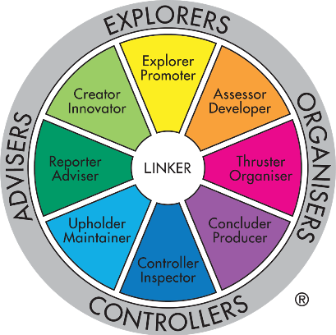
The Anatomy of the Collision: Concluder-Producer vs. Assessor-Developer
To understand why this friction occurs, we must look at the Team Management Wheel, which identifies work preferences based on how individuals approach tasks, relate to others, and manage information.
The Line Manager in our scenario holds a strong preference as a Concluder-Producer. Individuals with this profile are the bedrock of operational efficiency. Driven by a psychological need to see tasks through to completion, they adhere to strict schedules, enforce standards, and maintain stable, predictable workflows. They thrive on certainty and view a closed task as the ultimate metric of success.
Conversely, the reporting manager possesses a dominant preference as an Assessor-Developer. Sitting on a completely different quadrant of the wheel, Assessor-Developers are naturally wired to evaluate new opportunities, test ideas for viability, experiment with solutions, and refine concepts before they are locked down. They view a plan not as a rigid track, but as a working hypothesis open to continuous improvement.
When these two styles clash without mutual understanding, the psychological fallout is immediate:
- The Manager’s Perception: The Concluder-Producer manager sees the Assessor-Developer’s continuous appraisal of alternatives as an attempt to stall progress or subtly disrespect executive decisions.
- The Reporter’s Reality: The reporting manager is simply trying to add value by ensuring the team does not rush blindly into a flawed execution plan. They want to make the output better, not make the manager look worse.
Compounding this structural misalignment is a fundamental variance in extroversion. The reporting manager possesses a more extroverted, vocal style of processing information, whereas the line manager leans towards an introverted, reflective approach. The reporter’s tendency to think out loud, debate openly in team meetings, and canvas opinions widely across the department amplifies the line manager's anxiety. To an introverted Concluder-Producer, this public display of exploratory thinking looks less like collaboration and more like a public challenge to leadership.
The Path to Growth: Five Actionable Tips to Resolve the Dilemma
Here are five tactical steps for our Line Manager to transform this structural dilemma into a competitive advantage, ensuring they grow from reflection while enabling their reporting manager to shine.
1. Reframe Subversion as Style via Objective Data
The first step requires an internal cognitive shift to separate intent from behavioral output. By utilising Team Management Profile data objectively, the manager can depersonalise the tension. Acknowledge that the reporter’s probing questions are a natural expression of the Assessor-Developer preference. They are hardwired to analyse risks. When you realise their brain is simply scanning for operational gaps to protect the project, the perceived threat evaporates, replacing defensiveness with curiosity.
2. Formally Contract the 'Types of Work' Boundaries
Friction occurs when two preferences try to occupy the same functional space at the wrong time. To solve this, the manager should sit down with the reporting manager and map out project lifecycles using the TMP framework. Create a clear operational contract: grant the Assessor-Developer autonomy during the early stages—the Exploring, Assessing, and Developing phases. In return, establish a firm boundary where, once a strategic decision is finalised, the project shifts decisively into the Organising and Producing phases, where the manager's Concluder-Producer strengths dictate execution.
3. Establish Structured Communication Protocols for Extroversion
To mitigate the anxiety caused by mismatched extroversion, the manager must implement communication boundaries. If the reporting manager’s tendency to debate ideas openly in group settings feels overwhelming, redirect that cognitive energy into a controlled environment. Set up a recurring, one-to-one 'pre-briefing' session before major team meetings. This provides the extroverted Assessor-Developer with a dedicated forum to process thoughts aloud directly with the manager. The manager gains time to absorb the feedback quietly, keeping team meetings aligned.
4. Position the Reporter as the Innovation Gatekeeper
Instead of sidelining the reporting manager, leverage their natural strengths to elevate the entire unit. An Assessor-Developer is perfectly suited to evaluate incoming requests, assess new operational tools, or stress-test strategies before deployment. Assign the reporter the formal responsibility of reviewing new initiatives. By making them the official 'gatekeeper' of new ideas, you validate their expertise, channel their critical thinking productively, and give them a highly visible platform to shine, all while protecting your own bandwidth.
5. Cultivate Vulnerability through Shared Profile Analysis
True connection with a reporting team is forged through authentic vulnerability. The manager should initiate a transparent team session focused on the Team Management Wheel. Lead by example: share your profile as a Concluder-Producer. Admit that your natural instinct is to push for immediate closure and that you experience anxiety when plans change unexpectedly. By revealing your preferences and acknowledging where you need support, you create a safe psychological environment. Invite the reporting manager to share their insights, transforming friction into a shared framework for collective success.
Conclusion: From Friction to Synergy
The hallmark of an Impactful-Leader is not the absence of conflict, but the capacity to decode it. When line managers possess the psychological maturity to view behavioral friction through the objective lens of work preferences, they cease being victims of team diversity and become masters of it.
By recognising that an Assessor-Developer style is the natural counterpart—not the enemy—to a Concluder-Producer style, our Line Manager can successfully navigate this dilemma. They move from a place of self-doubt to absolute structural clarity. In doing so, they secure their position while creating an expansive leadership ecosystem where different styles are actively leveraged, communication gaps are bridged, and high-potential reporters are given the exact parameters they need to truly excel.
If you would like to explore how to integrate the Team Management Profile into your leadership framework or wish to learn more about managing style diversity within your executive teams, connect with our team today. Let us transform your management dilemmas into your organisation's greatest strategic advantages.